
Building a budget for free OnlyFans follows is simpler than it sounds, but it needs a routine. A free page sets its subscription price to $0, which means there is nothing to cancel when the month ends. Instead, the spending happens through tips and pay-per-view messages. That difference is exactly why a monthly cap helps.

Ranking sites such as BestOnlyFans exist partly because OnlyFans has no built-in discovery feed or directory. You cannot browse a central list of creators inside the platform. So you find pages through outside lists, then follow them at no cost. The risk is not the subscription. The risk is the small unlocks you approve one at a time.
This article sets out a monthly budgeting method you can repeat each cycle. It starts with a baseline review, moves through cap setting and weekly checks, and ends with a wrap-up that feeds the next month. The goal is a number you chose in advance rather than a number you discover on your statement.
Baseline review: measure before you cap
Before you set any limit, collect one month of real data. Guessing at your habits usually produces a cap that is either too tight to follow or too loose to matter. A short review gives you a starting figure you can defend.
- Total tips sent across all free pages in the last 30 days.
- Total pay-per-view unlocks, counted separately from tips.
- Number of free pages you actively open at least once a week.
- Number of free pages you follow but never open.
- Largest single unlock and the date it happened.
- Days of the month when spending clustered together.
Write these six figures down in one place. A note on your phone is enough. The point is to compare months later, not to judge the first one.
Most free-page spending lands in small amounts, so the totals can surprise you. That is normal. Small payments are easy to approve without thinking, and that is the pattern the cap is designed to interrupt.
While you are in your account settings, turn on two-step authentication if it is not already active. A budget protects your money, and account security protects the payment methods attached to it. Both take a few minutes.

Cap setting: match limits to unlock habits
Your cap should reflect what you actually do, not what you wish you did. The table below maps common habits to a monthly limit you can test for one cycle. Treat every figure as a starting point rather than a permanent rule.
| Unlock habit | Suggested monthly cap |
|---|---|
| Occasional tips, no PPV unlocks | $10 |
| Regular tips on two or three pages | $20 |
| Frequent PPV unlocks plus tips | $40 |
| Heavy unlocks across many pages | $60 |
Notice that these caps are separate from subscription costs. A free page charges nothing to follow, so every dollar you spend there is optional. Paid pages sit in a different range: $4.99 at the minimum, up to $49.99 at the maximum, with most between $4.99 and $15 and an average around $5 to $10.
There is no base price below $4.99 on a paid page. Only promotional first months can dip under that floor. If a paid page factors into your month, count it in a separate line so the free-page cap stays clean.
Tip: pick a cap you can hit without effort for two months before raising it. A limit you break in week one teaches you nothing about your habits.
Keep the free-page cap and any paid subscriptions in two columns. Mixing them hides which side is drifting, and the free side is usually the one that moves quietly.
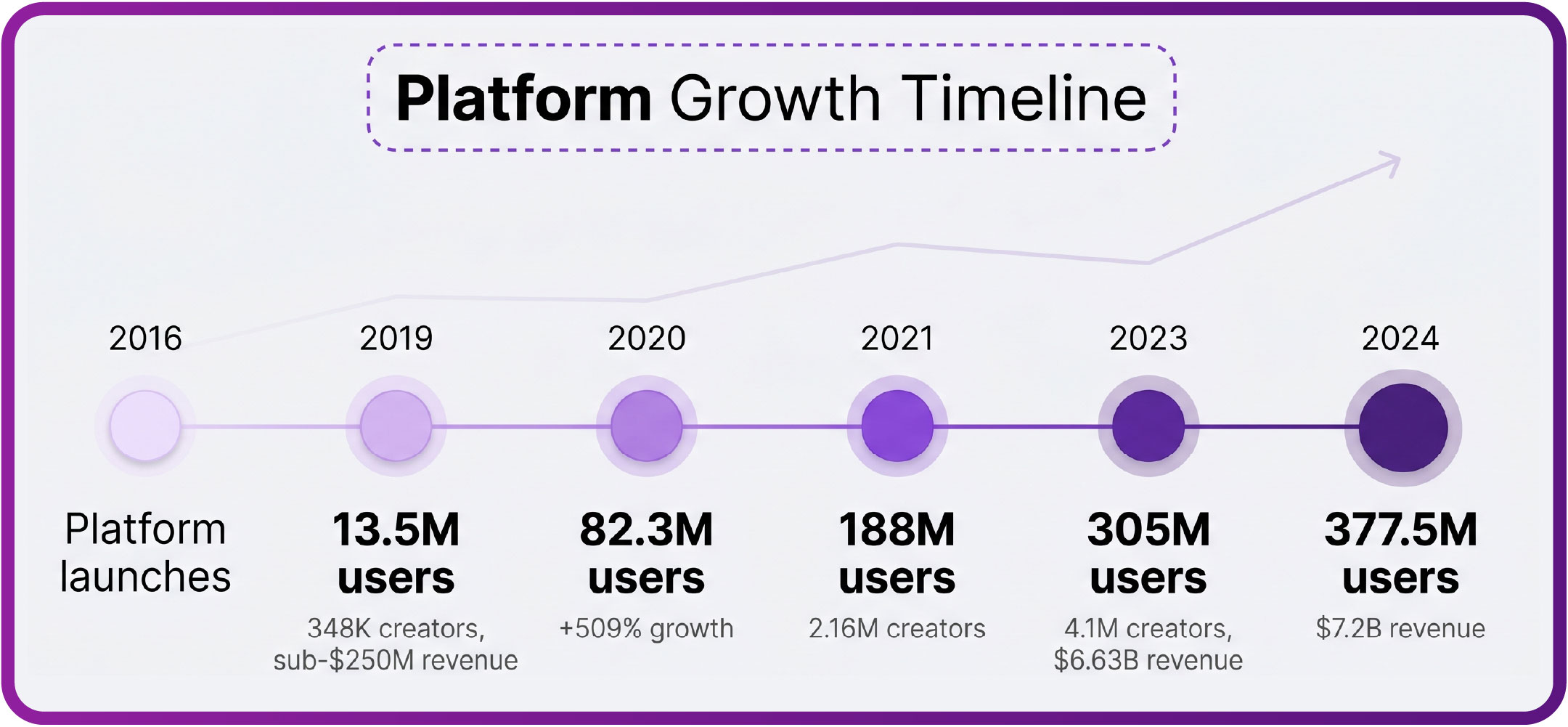
Platform growth charts show how many people now follow creators at zero cost. A larger pool of free pages means more chances to tip, not more obligations. The cap is what keeps those chances from turning into a total you did not plan.

Weekly checks: keep totals visible
A monthly cap fails when you only look at it on the last day. Weekly checks take a few minutes and keep the running total in view. Put the check on the same day each week so it becomes automatic.
- Add up tips and unlocks from the past seven days.
- Compare the running total against the days remaining in the month.
- Note any single unlock that was larger than usual.
- Remove one free page you have not opened in two weeks.
- Confirm no paid page renewed without your knowledge.
That last point matters more than it looks. When a creator raises the subscription price, auto-renew stops, and existing access lasts until the current paid period ends. A price change can therefore end a subscription without any action from you, which changes the next month’s total.
The 2020 surge in user growth appears in most public charts of the platform. It explains why so many free pages exist today and why outside directories became useful. With no internal feed, a directory is often the only practical way to find pages at all.

Mid-month adjustment: signs the cap needs to change
A cap is a tool, not a punishment. If it is wrong, adjust it once, in the middle of the month, and then leave it alone. Adjusting weekly turns the budget into noise.
- You hit the cap before the 15th for two months running.
- You stopped opening pages you enjoy because of the limit.
- You moved spending to a payment method outside the budget.
- Your list of active free pages grew by more than three.
- You spent nothing for two straight months.
The third sign is the one to watch. Moving a payment to another card does not reduce spending, it only hides it from your own tracking. If that happens, the cap is too low or the tracking method is too easy to avoid. For a starting point, onlyfans free chrome extension collects free pages.
Remember the platform fee when you set any figure. OnlyFans takes 20% on everything, including subscriptions, tips, and pay-per-view, and the creator keeps 80%. Your $20 in tips is $16 to the creator, but it is still $20 out of your account. Budget the amount you pay.

Rollover rules: decide what happens to unused budget
Unused budget needs a rule before the month starts. Without one, leftover money either disappears from your tracking or gets spent on the last two days. Pick a rule from the table and apply it consistently.
| Rollover rule | How it works |
|---|---|
| Full rollover | Unused amount moves to next month, capped at one month’s value |
| Half rollover | Half carries forward, half resets to zero |
| No rollover | Budget resets on the first day, unused amount is not saved |
A full rollover with a ceiling prevents two problems at once. It rewards a quiet month without letting a large balance build up and then vanish in one weekend. The ceiling is the important part.
If you follow a lot of free pages, the no-rollover rule is often easier. Free pages cost nothing to keep following, so there is no deadline pressure to spend before the month ends.
For any paid page in your budget, the cancel-subscription dialog is where the money actually stops. Access usually continues until the paid period ends even after you cancel. That delay is worth noting so you do not double-count the month.

Notifications: alerts that flag an overrun
Alerts catch drift earlier than a weekly review can. Set them once and let them run in the background. The list below covers the ones that matter for a free-page budget.
- Payment confirmation emails, filtered into one folder.
- Card alerts for any transaction above a set amount.
- A calendar reminder on the weekly check day.
- A reminder three days before the month ends.
- A note when a paid subscription price changes.
The price-change note is easy to miss and worth keeping. Because auto-renew stops when a creator raises the price, a subscription can end on its own, and your next month’s total drops without you doing anything.
Warning: do not rely on the platform to warn you about spending. Nothing in the account area tracks a monthly total for you, so your own record is the only one that exists.
If you want a lighter way to spot free pages and compare what they offer, a browser helper can sit alongside your budget rather than replace it. One option is this onlyfans free chrome extension, which slots into the same routine of checking before you spend. The budget still does the work. BestOnlyFans and similar rankings simply help you find pages worth following in the first place.
End-of-month wrap: three questions before the next cycle
The wrap takes about ten minutes and sets up the next month. Answer three questions in writing, then set the new cap. Skipping this step is how a budget slowly stops matching reality.
- Did the total stay under the cap, and by how much?
- Which free pages were worth the money and which were not?
- Should the cap stay the same, rise, or fall next month?
Keep the answers short. Three lines a month builds a record you can actually read later, and one year of those lines shows your real pattern better than any single month can.
Revenue breakdowns show that earnings are spread unevenly, with top creators taking a large share. That is useful context, not a reason to tip more. Your budget is about your own totals, and the figures on the other side do not change your cap. BestOnlyFans refreshes its rankings every month.
FAQ
Do free pages ever charge a subscription later?
Yes. A page can switch from free to paid at any time. If you already follow it, check the page before the change takes effect so the new price does not land in your budget unplanned.
Is there a subscription price below $4.99?
No. The minimum paid subscription is $4.99, and $49.99 is the maximum. Only promotional first months can go below that floor.
What happens to my access if a creator raises the price?
Auto-renew stops when the price goes up. You keep access until the current paid period ends, and then the subscription lapses unless you renew at the new price.
How much of my spending reaches the creator?
The creator keeps 80% and the platform takes 20%, applied to subscriptions, tips, and pay-per-view. Your budget should still track the full amount you pay.